
The duo bought additional shares in pharmaceutical companies Lupin and Jubilant Life Sciences, along with Agro Tech Foods and NCC during Q2FY21

Rebound in IT majors TCS and Infosys in late trades helped markets end higher.

Manappuram declared consolidated assets under management (AUM) growth of 27 per cent year-on-year (Y-o-Y) (5.1 per cent quarter-on-quarter or Q-o-Q) to Rs 38,950 crore. Net interest income (NII) saw a margin expansion of 24 basis points (bps) Q-o-Q to 15.44 per cent.

Except for Satyam Computers, attrition rate went higher at Infosys, TCS and Wipro from both the previous quarter as well as the year-ago period.

Citing a weak manufacturing sector coupled with the steep margin compression, SBI Research has pencilled in the country's GDP growth for the second quarter at 5.8 per cent, down 30 basis points from average estimates. The government will release the official numbers on November 30. In a report on Monday, SBI Research headed by Soumya Kanti Ghosh said corporate results, operating profit of companies, excluding banking and financial sector, degrew by 14 per cent in Q2FY23 as against 35 per cent growth in Q2FY22, though the top line continued to grow at a healthier pace.

While Mukesh Ambani-led RIL posted a 108 per cent YoY rise in profit after tax for Q4FY21 at Rs 13,227 crore, it fell short of Bloomberg estimate of Rs 13,704 crore.

RIL's standalone net profit rose one per cent quarter-on-quarter
.jpg)
The Oil Ministry on October 31 issued orders asking upstream oil and gas producers like ONGC and Oil India Ltd to give Rs 16,729.74 crore (Rs 167.29 billion) to make up for 47 per cent of the Rs 35,328-crore (Rs 353.28 billion) revenue that retailers lost on selling diesel, domestic LPG and kerosene at government controlled rates in second quarter.

The combined weight of IT companies in the benchmark Nifty 50 index is now at a five-year high of 15 per cent as these companies continue to outperform the broader market.

Major losers include Lupin 1.96 per cent, along with Tata Motors, Coal India and Sun Pharma.

Asia has opened largely in the green ahead of a raft of Chinese data due during the day.

After 3 weeks of consecutive rally, this week was a breather for the index, which corrected by almost 1.5%.

Tech Mahindra was the top gainer in the Sensex pack, jumping over 5 per cent, followed by Bajaj Finance, Bharti Airtel, Bajaj Finserv, L&T, Tata Steel and Infosys. NSE Nifty surged 191.95 points to 15,824.05.

Tata Motors on Monday launched the country's first CNG truck in the medium and heavy commercial (M&HCV) vehicle segment in the 28- and 19-tonne nodes. Most truck makers, including Tata Motors, currently offer CNG only in the small and light commercial vehicle segments. The company also launched a fleet of seven trucks in the intermediary and light commercial vehicle (I&LCV) segment, meant for varied applications.

The Nifty had hit its third successive record high of 7,922.70 today.

The S&P BSE Sensex ended up 28 points at 25,844 and the Nifty50 ended flat at 7,915.

The rupee fell to a two-year low of 64.84 against the US dollar.

SpiceJet, India's second-largest private airline, kicked off the process of hiving off its logistics business to its subsidiary SpiceXpress as it looks to raise much-needed capital. On Tuesday, the company sought its shareholders' approval to complete the process and to raise up to Rs 2,500 crore via a qualified institutions placement (QIP). It is in talks with multiple private equity investors as it tries to sell shares in the logistics arm to raise money.
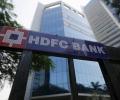
The country's most valuable lender HDFC Bank can perhaps no longer claim to be a favourite of foreign portfolio investors (FPIs). Two data indicators, both somewhat interconnected, point to this - the diminishing premium of HDFC Bank's American depositary receipts (ADRs) compared to local shares, and the ample investment opportunities available to FPIs in the domestic market. The ADR premium has shrunk to below 5 per cent, down from over 30 per cent in March 2021, and even lower than recent levels.

Most companies reporting an improvement in operating margins in Q1 as they cut ad spends and other expenses.

Sensex climbs higher on favourable global cues.

Sun Pharma was the best gainer among Sensex components, surging 6.91 per cent

The two IT majors -- Infosys and TCS -- delivered disappointing results for the fourth quarter of the 2022-23 financial year (Q4FY23). Poor macro conditions and weak sentiment in the banking, financial services and insurance (BFSI) space accounted for the miss. For TCS, revenue in constant currency (CC) terms grew at 0.6 per cent on a quarter-on-quarter (QoQ) basis. Weakness was visible in North America, primarily due to deferred discretionary spending.

'If individual stocks start falling 25% to 30% or more, then I doubt how many of them will be able to withstand that (kind of selloff). That is when you'll see panic coming in.'

Cisco, which employs about 73,000 people worldwide, has warned against a 'challenging macro environment'

'I cannot cope with the demand. It will take us a couple of months to ramp up production.'

Progress of monsoon, investment trend by foreign investors and the movement of rupee against the dollar will also influence sentiment

The Sensex had bounced back with gains of 94 points or 0.3%

Sensex ended at 26,272 up 125 points and Nifty ended at 7,831 up by 35 points.

Infosys, Wipro and HUL among the top losers for the day.

On the sectoral front, rate-sensitive sectors such as Bankex and Auto gained by 1% and 0.7% respectively while BSE Consumer Durables gained 1.4%.
In the broader markets, the BSE Midcap and Smallcap indices were up 0.5% each

Financial shares were among the top gainers with HDFC leading the gains.

Tata Steel has a very British problem. The performance of Europe dragged the steel major's October-December (Q3FY23) performance with the UK business accounting for a major part of the operating loss; on the bottom line, the overhang of the British Steel Pension Scheme (BSPS) showed. And a nearly three-year discussion with the UK government on a support package for a green transition resulted in an offer that fell short of the ask.
The process of switching off the 3G network has already started with Kolkata in the recent-concluded June quarter. By September, the shutdown will be affected in 6-7 more circles and between December and March the entire 3G network would be shut down.

BSE Mid-cap index ended lower by over 2.5% and BSE Small-cap index tumbled over 3%.

Sharma would be 60 in November 2018, and would have completed 10 years as Axis Bank's CEO the following year in June.

Private lenders HDFC Bank and ICICI Bank were the top gainers along with index heavyweights
The environment looks conducive for growth for corporate India and thus we believe that equities would continue to deliver decent returns over the long term. \n\n
With rate cut expectations running high ahead of RBI meet this week, risk appetite improved especially in rate sensitive stocks
